
If you're a high school junior or the parent of one, college is probably on your mind a lot these days, along with that familiar mix of excitement and "oh no, where do we even start?" It's a lot to navigate: the endless school options, the confusing costs, the hype from social media and rankings, and unsolicited opinions about where you should apply. The good news? You're not expected to figure this out on your own. There are many books out there that cut through the confusion and help you focus on what truly matters - finding a college where you'll be happy and successful.
I've pulled together four recent releases that I think are especially helpful for families in the thick of the college search. These are practical, thoughtful guides written by people who truly understand what students and families are going through.
The College Finder by Dr. Steven R. Antonoff and Jay McCann (5th Edition, 2025)
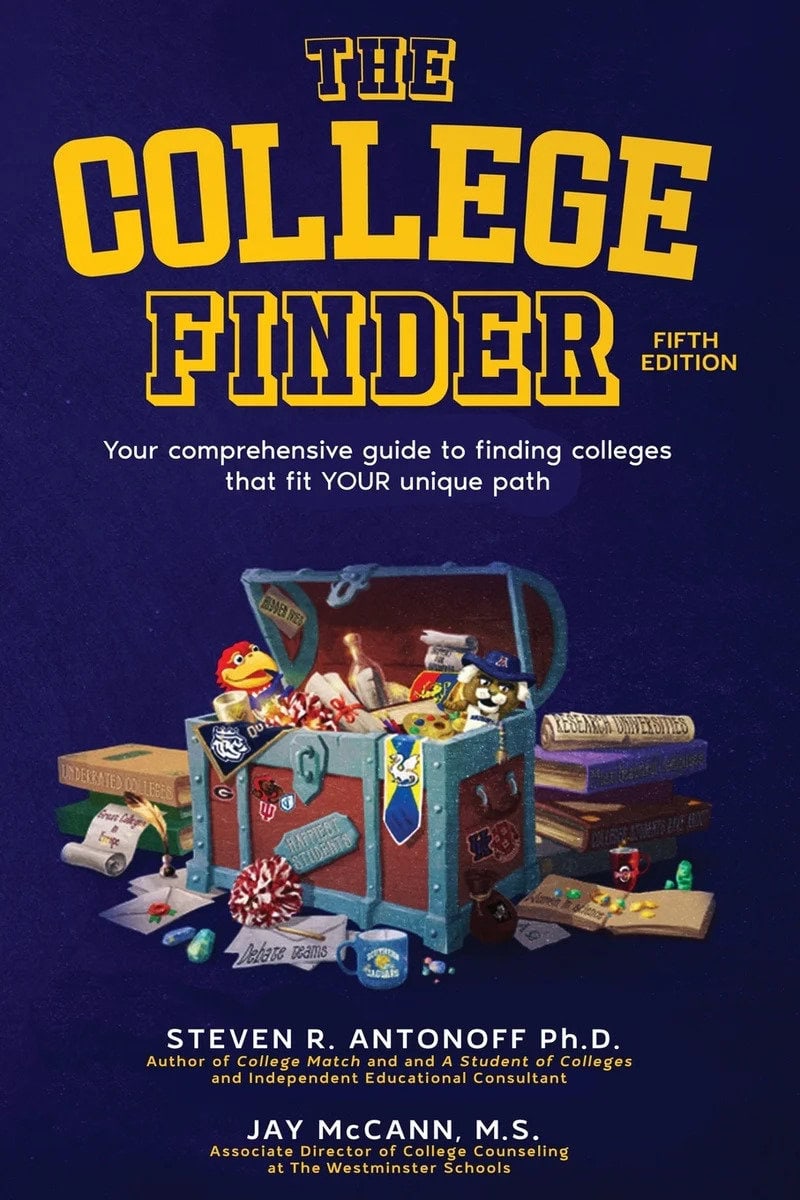
If you feel overwhelmed by the sheer number of colleges out there (4000+), this book is your new best friend. The fifth edition of The College Finder features over 1,200 carefully curated lists that help you discover schools based on what actually matters to you - not just the rankings.
Why you'll love it: This isn't just another college directory. Antonoff and McCann have gathered expert recommendations and have organized colleges into categories that go way beyond the typical "best schools" lists. Looking for colleges strong in a specific major? Schools with great financial aid? Colleges for students who like to wear flip flops? Politically involved students? Campuses where students with learning differences thrive? Athletic opportunities? It's all here, and the 2025 edition has 65% more content than the previous version, with a big emphasis on finding your fit.
Perfect for: Students who want to build a thoughtful college list beyond the usual names, and families who need help organizing their search around what truly matters.
Dream School: Finding the College That's Right for You by Jeffrey Selingo (2024)
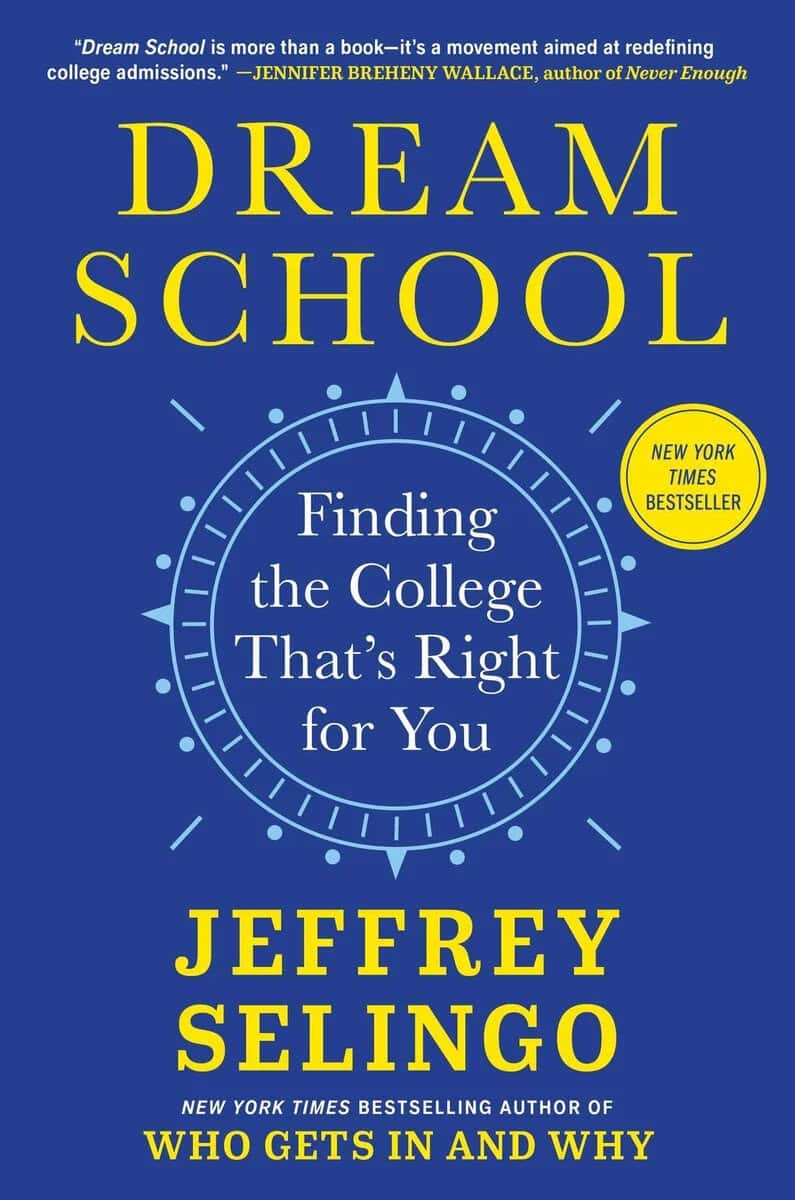
The "Top 25 or bust" mindset causes a lot of stress for families. Jeffrey Selingo's Dream School offers a refreshing alternative. Based on research with over 3,000 parents, this book challenges the notion that prestige is everything and shows you how to identify colleges where you'll actually thrive.
Why you'll love it: Selingo doesn't just tell you to "think differently," he gives you the tools to do it. The book explains why elite degrees matter less than most people think, highlights what really predicts success after college (spoiler: it's not the name on your diploma or what social media says), and even includes a list of 75 accessible, affordable "hidden gem" schools that deliver incredible value. It's honest, research-backed, and written in a way that feels like you're getting advice from a knowledgeable friend.
Perfect for: Families caught up in the prestige chase who need permission and practical guidance to broaden their search and focus on fit and value over brand names.
The Price You Pay for College by Ron Lieber (2021)

College costs can be overwhelming, confusing, and frankly, terrifying. Ron Lieber's guide tackles the financial aspects of college decisions, helping families understand what they're really paying for and whether it's worth it.
Why you'll love it: This New York Times bestseller is comprehensive and detailed without being difficult to understand. Lieber, the Times' "Your Money" columnist, spent years interviewing college presidents and financial aid officers to demystify the system. He explains why college costs so much, breaks down FAFSA and merit aid, helps you assess what's actually worth paying extra for (spoiler: lazy rivers aren't it), and provides concrete strategies for saving, borrowing, and negotiating. The book also addresses the emotional aspects—the fear, guilt, and status anxiety that can cloud decision-making.
Perfect for: Any family stressed about college costs who wants to understand the financial system, assess true value beyond rankings, and make informed decisions about what to pay and how to afford it. This is especially valuable if you're trying to figure out whether paying an extra $50,000 or $150,000 for one school over another makes sense.
The Truth About College Admission by Brennan Barnard and Rick Clark (Updated Edition, 2023)
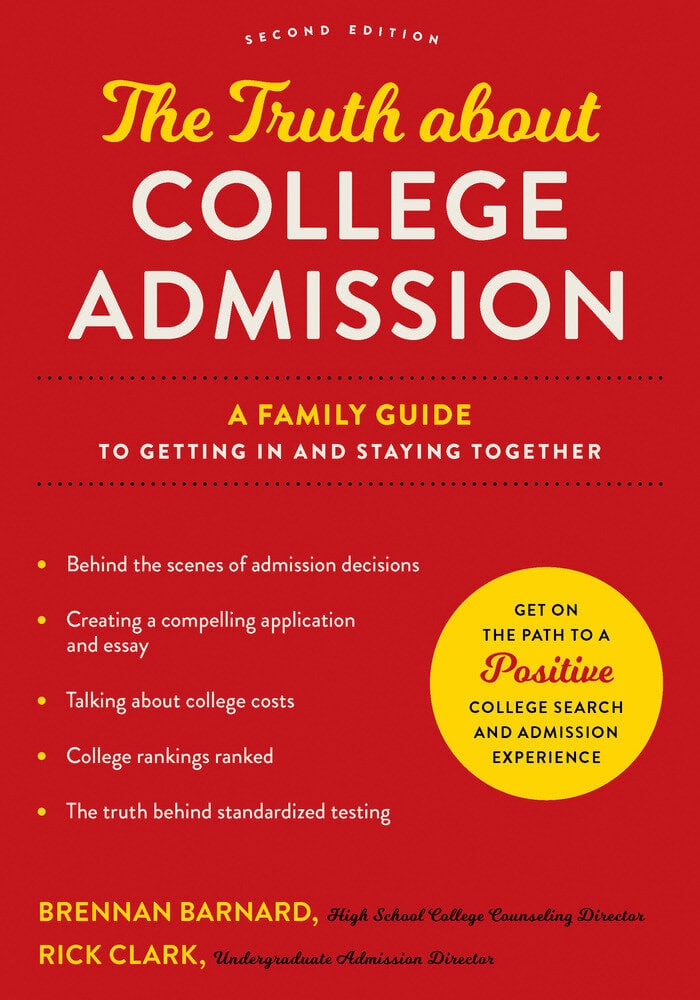
Sometimes you just need someone to cut through all the noise and tell you what's actually going on. That's exactly what Barnard (a college counselor) and Clark (a university admissions director) do in this comprehensive guide.
Why you'll love it: This book feels like having an honest conversation with two people who've seen the college admissions process from both sides. They cover everything: building your college list, understanding what schools really look for, demystifying financial aid, crafting authentic applications, and—crucially—how to keep your family relationships intact during what can be a stressful time. The book includes helpful sections like "Try This," "Talk About This," and "Check In" that actually help families have productive conversations instead of arguments.
Perfect for: Any family that wants a comprehensive, no-nonsense guide that balances practical strategy with maintaining perspective and family harmony.
Why These Books?
What I love about all four of these books is that they approach college admissions as something more than just a race to a finish line. They help you think about what kind of college experience will actually serve you well, how to find schools where you'll belong and thrive, and how to navigate the process without losing your mind (or your relationship with your parents/kids).
Whether you're just starting to build your college list or you're in the thick of applications, any of these books will give you a valuable perspective and practical tools. They're also great conversation starters- perfect for those car rides to campus visits or family dinners when college is inevitably the topic.
While building a college list for applications most people know to focuson on GPA, Course Rigor and possibly state test scores. However, there is more to the process than just the student stats.
When applying to colleges, it's crucial to understand the concept of institutional priorities. These are specific goals and values each college holds, guiding their admissions process and shaping the makeup of their student body. Let’s dive into what institutional priorities are and how they can impact your acceptance chances.
What Are Institutional Priorities?
Institutional priorities are the strategic goals set by a college or university to fulfill its mission and vision. These priorities influence admissions decisions as colleges seek to build a diverse, talented, and well-rounded student body that aligns with their goals. Priorities can vary widely between institutions and can include a range of academic, demographic, and extracurricular factors.
How Do Institutional Priorities Affect Acceptance?
When reviewing applications, admissions committees look for students who can contribute to their institutional goals. This means that beyond grades and test scores, they consider how a student’s profile matches their current priorities. Here's how these priorities might impact your acceptance:
- Academic Programs and Interests:
- If a college wants to strengthen a particular academic program, they might give preference to applicants interested in that field. For instance, a university aiming to bolster its engineering department may prioritize applicants with strong math and science backgrounds.
- Geographic Diversity:
- Colleges often seek to create a geographically diverse student body. If you’re from an underrepresented region, this might increase your chances of acceptance. For example, a school in the Northeast might prioritize students from the Midwest or international applicants.
- Demographic Goals:
- Achieving diversity in terms of race, ethnicity, socioeconomic status, and gender can be a priority. Colleges may look for students who can help them meet these diversity goals, enhancing the overall campus experience.
- Extracurricular Contributions:
- Schools often prioritize applicants who excel in extracurricular activities that align with their institutional values. A college that needs a new soccer goalie or a trombone player for the marching band may prioritize students who meet these goals.
- Financial Goals
- Colleges have financial goals that can influence their admissions decisions. This might include prioritizing full-pay students or out-of-state or International students.
Understanding these priorities can help you complete your application to highlight the aspects of your profile that align with a college’s goals. It's about more than just meeting the academic requirements; it's about showing how you fit into the bigger picture of what the college is trying to achieve.
As US News & World Report explains, “Colleges are looking for students who will make a difference on their campus. This means looking beyond academics and test scores to other qualities that contribute to their institutional priorities”.
The Unpredictability of Institutional Priorities
It’s important to note that institutional priorities can change from year to year, and there's no way to know exactly what a college is prioritizing at any given time. Colleges are crafting a full class each year, balancing various needs and goals to create a diverse and dynamic student body. This means that while one year they might focus on increasing representation in a specific academic program, the next year they could be aiming to boost geographic diversity or enhance campus culture through specific extracurricular talents.
Understanding this unpredictability underscores the importance of presenting a well-rounded application that showcases your unique strengths and how you can contribute to the college community. Additionally, make sure you have a balanced list of colleges you are applying to.
If you need guidance on how to navigate this process and make your application stand out, feel free to reach out! I’m here to help you make your college dreams a reality.
FAFSA Updates:
When it comes to college financial aid, most families are familiar with the Free Application for Federal Student Aid (FAFSA). The FAFSA has many changes that will be launched this year due to the FAFSA Simplification Act of 2021. These changes have resulted in a delay in releasing the application. In prior years the application opened on October 1st. This year, it is not expected until December or potentially January.
For more information about the changes to FAFSA please take some time to read this helpful breakdown on Forbes.com.
While you wait for the FAFSA you may still need to complete the lesser-known application called the CSS Profile.
What is the CSS Profile?
The CSS Profile, or the College Scholarship Service Profile, is an online application that collects information used by nearly 400 colleges and scholarship programs to award non-federal aid. Unlike the FAFSA, which is used to allocate federal grants and loans, the CSS Profile is primarily used by private colleges to distribute their own institutional funds.
Key Differences Between FAFSA and CSS Profile
Who Requires It?
FAFSA: Required by all U.S. colleges and universities for federal aid including grants, work study or federal loans.
CSS Profile: Required by some private colleges and a few public schools for institutional aid.
Depth of Financial Information
FAFSA: Asks for basic financial information and can be matched to your tax filing from the prior, prior year.
CSS Profile: Requires more detailed financial information, including home equity and small family businesses.
Fees
FAFSA: Free to submit.
CSS Profile: Costs $25 for the first college and $16 for each additional college. Fee waivers are available for eligible students.
When should you complete the CSS Profile?
The application opened on October 1st and it may benefit you to complete it as early as possible. Each college will have its own deadline and it is important to ensure this is done before those deadlines for college applications.
Why Should You Complete the CSS Profile?
1. More Aid Opportunities: The CSS Profile allows you to be considered for institutional scholarships and grants that are not available through FAFSA.
2. Comprehensive Financial Picture: The form considers more nuanced financial situations, potentially leading to more generous aid packages. CSS Profile will still take into account if you have multiple college students at the same time, which FAFSA will not.
3. Early Application: Some colleges have earlier deadlines for the CSS Profile than for the FAFSA, allowing you to secure aid earlier in the admissions process.
How to Complete the CSS Profile
1. Create a College Board Account: If your child has taken the SAT, they likely already have an account created. Parents use this account to help fill out the information.
2. Gather Financial Documents: This includes tax returns, W-2 forms, and information about savings and investments.
3. Submit by the Deadline: Each college will have its own deadline, so make sure to check and submit the form on time.
For more information on the CSS profile, including a list of colleges requiring it, visit the College Board website.
Final Thoughts
While the CSS Profile may require more time and effort than the FAFSA, the potential benefits make it well worth your while. By completing both forms, you're maximizing the financial aid opportunities available to your child.
Resources:
US News: Everything you need to know to complete the CSS Profile
The Price You Pay for College by Ron Lieber
Embarking on the exciting journey of college while managing a learning disability or other neurodiversity may seem daunting at first. However, it's important to remember that college campuses are equipped with numerous resources and support systems to help you succeed. In this blog post, we will explore the steps you can take and the resources available to showcase your strengths and thrive during your college experience.
1. Disclosing Your Learning Disability: The First Step Towards Success
To ensure that you receive the support you need, it's essential to disclose your learning disability to the college's disability services office as early as possible. By doing so, you can work together to identify appropriate accommodations and tailored support services. This may include extra time on exams, note-taking assistance, or assistive technology. Remember, the goal is to create an inclusive environment where you can excel.
It is important to note that the college does not follow an IEP for students. This is a K-12 document that does not apply to colleges. However, make sure you bring this documentation with you to your school’s office in order to show them the plan that has worked for you in the past.
As soon as you finish reading this blog go to your college website and figure out how to make an appointment with the learning services office!
Tip: Take some time to research the accommodations that are generally approved in college and understand which ones might work best for you. Understood.org has gathered a great list of Types of College Accomodations and Services to get you started.
2. Utilizing On-Campus Support Services: Maximizing Your Potential
Colleges offer a wide range of on-campus resources designed to facilitate your academic journey. Take advantage of tutoring and academic coaching services, join study groups, and access counseling services. These services provide personalized assistance, helping you excel academically and build valuable skills for lifelong success.
3. Building Strong Relationships with Professors: Collaborating for Success
Establishing a positive working relationship with your professors can greatly contribute to your college experience. By sharing information about your learning disability and the accommodations you've been granted, you create an open line of communication. This allows your professors to understand your unique needs and provide the necessary support. It also showcases your determination and willingness to succeed. You may need to remind your professors as you work together about your accommodations, but that is part of advocating for yourself and they won’t mind as long as you keep communication open.
Tip: Check out your college's website and see if there is a resource for you about talking with your professors like this one from Bates College.
4. Self-Advocacy and Self-Awareness: Unlocking Your Potential
One of the most empowering steps you can take is prioritizing self-advocacy and self-awareness. Embrace your strengths and challenges, and proactively seek out the support you need. Don't hesitate to ask for help when necessary and be open to feedback from others. By understanding yourself better, you can navigate college with confidence, embracing your unique abilities.
5. Balancing Physical and Mental Well-being: A Key to Success
College life can be demanding, so it's crucial to prioritize your physical and mental health. Establish healthy habits such as getting enough sleep, engaging in regular exercise, and maintaining proper nutrition. Additionally, don't hesitate to seek counseling services when needed. Taking care of yourself holistically will enable you to thrive academically and personally.
College is an exciting chapter filled with endless possibilities, and having a learning disability or neurodiversity does not hinder your potential for success. By utilizing the resources available to you, embracing your strengths, and advocating for yourself, you can flourish in college. Remember, your unique perspective and talents are valuable assets that will contribute to your personal growth and academic achievements. So, embrace the journey, and let your brilliance shine!
We understand that navigating college with a learning disability or neurodiversity can feel overwhelming at times. At Windbourne College Consulting, we are dedicated to helping high school students with learning differences find the right college fit and maximize their potential for success.